Phone Prices Are Climbing Again: Memory Shortage Reaches Budget Brands
Lava raised prices across its smartphone lineup by up to Rs 3,000 from November 15, 2026, citing memory shortages. Similar hikes already hit China in September, and the same supply pressure now sits behind every budget phone price.
Article Content
On November 15, 2026, Lava became the latest phone maker to raise prices, lifting its entire smartphone range by up to Rs 3,000 and pointing directly at memory shortages. The move matters beyond one Indian brand: it shows that the chip squeeze that started with flagship launches in China has reached the budget end of the market.
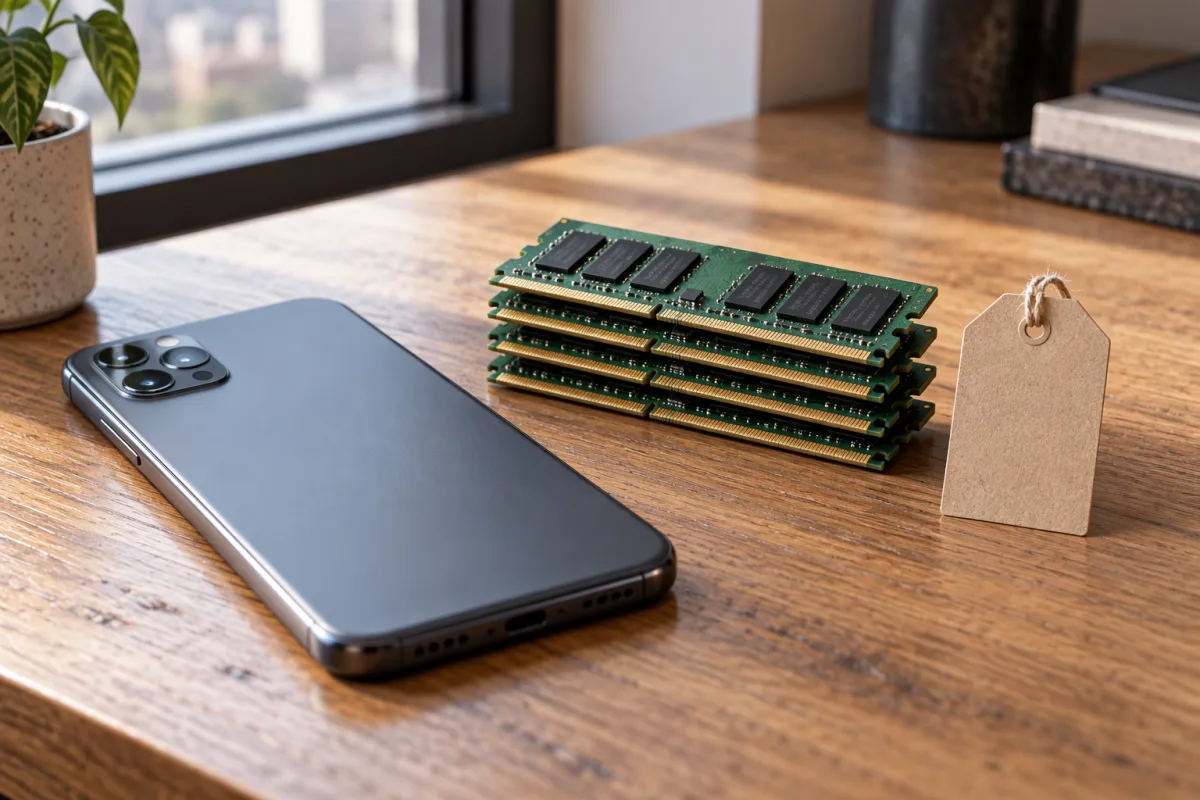
The cause is not a mystery. AI data centres are absorbing high-bandwidth memory at a pace that has shifted manufacturing capacity away from the standard DRAM and NAND used in phones. When memory supply tightens, every phone maker pays more for the same 8GB of RAM and 128GB of storage, and the brands selling at the lowest prices have the least room to absorb it.
What changed this week
Lava's increase took effect on November 15 and covers all of its smartphones. The company has not published per-model prices, so the exact amount varies by device, with the ceiling at Rs 3,000. The stated reason was the ongoing shortage of memory parts, not currency movement or tax changes.
That follows a round of increases in China in September. Reports at the time put the Huawei Mate 80 up by 1,000 yuan, the Mate 90 Pro Max up by 200 yuan, both Xiaomi 17 models up by 300 yuan, and the Honor Power2 and Magic8 up by several hundred yuan depending on variant. Those are flagship and upper-mid-range devices, so the increases were painful but survivable. A Rs 3,000 rise on a budget phone is a different kind of problem.
Where prices have moved
| Market | Brand and models | Reported increase |
|---|---|---|
| China, September 2026 | Huawei Mate 80 | 1,000 yuan |
| China, September 2026 | Huawei Mate 90 Pro Max | 200 yuan |
| China, September 2026 | Xiaomi 17 and 17 Pro | 300 yuan each |
| China, September 2026 | Honor Power2 | 500 to 600 yuan |
| China, September 2026 | Honor Magic8 series | 300 to 500 yuan |
| India, November 15, 2026 | Lava, all smartphones | Up to 3,000 rupees |
The figures are local currencies, and they should not be converted into taka as a forecast. What travels across borders is the underlying cost pressure, not the exact number.
Why budget phones feel it first
Memory is a fixed cost per device: a phone needs a set amount of RAM and storage no matter what it costs elsewhere. On a flagship, the memory bill is a small slice of a large price. On an entry-level phone it is one of the biggest single components, so the same percentage increase in memory cost eats a much larger share of the margin.
That leaves budget brands with three options: absorb the cost, cut elsewhere, or raise the price. Cutting elsewhere is already visible across the market in smaller chargers, slower storage and fewer accessories in the box. Raising the price is the option Lava chose this week, and other budget-focused brands are under the same pressure.
What it means for buyers in Bangladesh
Local prices follow import costs with a lag, and the lag works in both directions. Some shops will still be selling stock bought at the old cost, while others will price new stock at the new rate. That creates a window where identical phones sit at noticeably different prices on the same street.
Our phone pages list reference prices for each model, and they are a starting point rather than a guarantee. Before paying, confirm the exact variant and the date the shop last updated its price. A phone that was good value at one price can look ordinary after a rise of a few thousand taka.
Two practical notes for this month. First, if a model you want is already in stock at the old price, the difference is real money and worth checking quickly. Second, do not let a price rise push you into a rushed purchase: a phone that is overpriced today is still overpriced next week, and stock levels usually settle after the first wave of increases.
How we will track it
We update prices on the site as new local figures appear, and every phone page shows its own variants rather than a single headline number. When a model changes, the page changes with it, so the Redmi 17 5G page and the Helio 150 page are the places to check the current reference figure for those two devices.
The bigger picture is simple: the memory shortage is no longer a story about flagships in China. It has reached the price bracket most Bangladeshi buyers shop in, and the next few weeks will show which brands pass the cost on and which try to hold their prices.