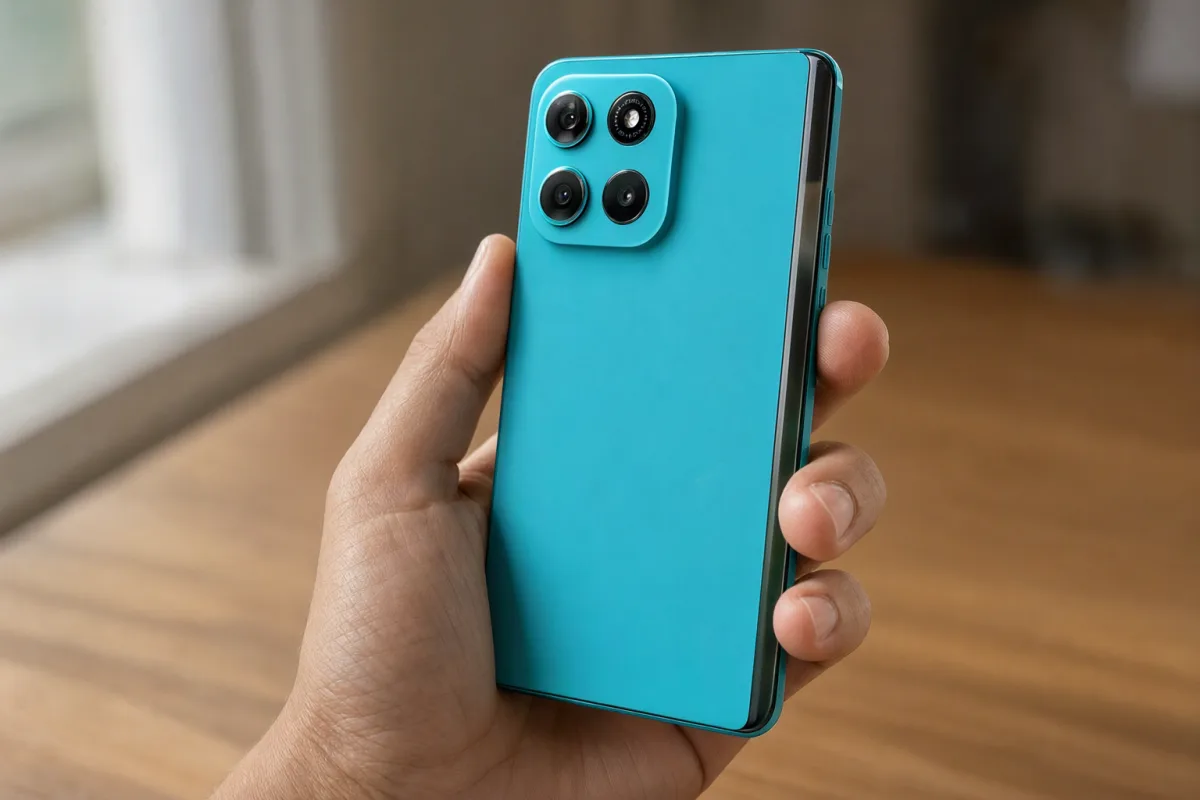
Oppo Reno17 vs Reno17 Pro (China) Review: Which One Should You Buy?
The Oppo Reno17 (China) and Reno17 Pro (China) split their strengths in opposite ways: the standard model brings an 8,000mAh battery and three 50MP cameras, the Pro a 200MP main camera in a compact body. Expected at around ৳70,000 and ৳80,000 as unofficial imports, this review compares both and answers which one is worth the money.
Article Content
Oppo announced the Reno17 and Reno17 Pro in China on November 16, 2026, and both phones are expected to go on sale there on November 20. Neither has launched in Bangladesh, so the ৳70,000 and ৳80,000 figures local importers are quoting are unofficial estimates, and they come without manufacturer warranty. This single review covers both models side by side using the specifications we maintain on our Oppo Reno17 (China) and Oppo Reno17 Pro (China) pages. We have not handled retail units, so anything that needs sample photos or measured battery runs is flagged as such instead of guessed.
The unusual part is how the two phones divide their jobs. Buyers usually expect the Pro to be the bigger, longer-lasting model, but Oppo has done the opposite: the Reno17 Pro is the compact, camera-first phone, while the standard Reno17 is the large-screen endurance machine. That single decision shapes every comparison below.
Oppo Reno17 vs Reno17 Pro (China) at a glance
| Feature | Oppo Reno17 (China) | Oppo Reno17 Pro (China) |
|---|---|---|
| Display | 6.56-inch AMOLED, 1208 x 2624 (440ppi), 120Hz, 6,000 nits peak | 6.32-inch AMOLED, 1216 x 2640 (460ppi), 120Hz, 3,840Hz PWM |
| Chipset | Qualcomm Snapdragon 7 Gen 4 (4nm) | MediaTek Dimensity 8550 Super (4nm) |
| Memory | 8/12GB RAM, 256GB to 1TB, UFS 3.1, no card slot | 8/12GB RAM, 256GB or 512GB, UFS 3.1, no card slot |
| Rear cameras | 50MP f/1.8 wide (OIS) + 50MP f/2.8 3.5x telephoto (OIS) + 50MP f/2.0 ultra-wide (116°) | 200MP f/1.8 wide (OIS) + 50MP f/2.8 3.5x telephoto (OIS) + 50MP f/2.0 ultra-wide (116°) |
| Selfie camera | 50MP f/2.0 ultra-wide (100°, autofocus) | 50MP f/2.0 ultra-wide (100°, autofocus) |
| Video | 4K@30/60fps, gyro-EIS, HDR | 4K@30/60fps, gyro-EIS, HDR |
| Battery | 8,000mAh silicon-carbon | 7,250mAh silicon-carbon |
| Charging | 80W wired, 55W PPS, UFCS, reverse wired, no wireless | 80W wired, 55W PPS, UFCS, reverse wired, no wireless |
| Body | 157.6 x 75.3 x 8.3mm, 206g, IP68/IP69K | 151.2 x 72.4 x 8.3mm, 192g, IP68/IP69K |
| Software | Android 17, ColorOS 17 | Android 17, ColorOS 17 |
| Price in Bangladesh | ৳70,000 unofficial (expected) | ৳80,000 unofficial (expected) |
Design, size and durability
Both phones share one remarkable number: 8.3mm of thickness. The Reno17 carries an 8,000mAh silicon-carbon cell at that thickness, and the smaller Reno17 Pro carries 7,250mAh. Silicon-carbon batteries store more energy in the same space than ordinary lithium-ion designs, and this pair is the clearest demonstration of the technology we have seen at this price. The difference is in footprint, not thickness. The standard model is 157.6mm tall, 75.3mm wide and 206g; the Pro is 151.2mm tall, 72.4mm wide and 192g.

In the hand, that is the whole argument for the Pro. It is 6mm shorter, 3mm narrower and 14g lighter, which is the difference between a phone you can use one-handed and one you cannot. The Reno17 is not unreasonably heavy for an 8,000mAh device, but its size is a daily presence.

Elsewhere the two are twins: glass front, aluminum frame, the same Black, Blue and White finishes, an optical fingerprint reader under the display, an infrared blaster, NFC, and USB-C 2.0 with OTG. Neither has a 3.5mm headphone jack or FM radio. Both carry an IP68/IP69K rating, which covers high-pressure water jets as well as submersion up to 1.5m, and that is more protection than most phones in this price bracket advertise.
Display comparison
The standard Reno17 uses a 6.56-inch AMOLED with 1B colors, a 120Hz refresh rate and a resolution of 1208 x 2624, or about 440 pixels per inch. Oppo quotes 6,000 nits of peak brightness, a figure aimed at outdoor visibility. The Reno17 Pro uses a smaller 6.32-inch AMOLED with the same 1B colors and 120Hz, but a sharper 1216 x 2640 resolution, about 460 pixels per inch, plus 3,840Hz PWM dimming that is designed to reduce flicker for people who are sensitive to it. Oppo lists no peak brightness figure for the Pro in its published specification, so we will not invent a comparison for it.
Both panels use Crystal Shield Glass and both have punch-hole selfie cameras. The practical split is simple: the standard Reno17 gives you more screen and a stated brightness advantage, while the Pro gives you a denser, sharper panel in a body that fits a smaller hand. Neither is the wrong choice; they are tuned for different priorities.
Performance and software
The Reno17 runs Qualcomm's Snapdragon 7 Gen 4 on a 4nm process: one Cortex-A720 core at 2.8GHz, four more at 2.4GHz, three Cortex-A520 cores at 1.8GHz and an Adreno 722 GPU. It is the same chip as the Reno16 and the Vivo V80, so ColorOS is well optimised for it, and it handles everyday apps, social feeds and multitasking comfortably with gaming best kept to medium-to-high settings.
The Reno17 Pro moves to MediaTek's Dimensity 8550 Super, also 4nm, with one Cortex-A725 core at 3.4GHz, three at 3.2GHz, four at 2.2GHz and a Mali-G720 MC8 GPU. On paper it has the higher clock speeds and the more game-focused graphics core, so it should pull ahead in sustained gaming and heavy multitasking. It is still not a flagship 8-series chip, and no benchmark numbers have been published, so treat performance claims for either phone as expectations rather than measured results.
Memory and storage are closely matched. Both start at 8GB with 256GB and offer 12GB variants, with UFS 3.1 storage and no microSD slot. The difference is the ceiling: the standard Reno17 offers a 12GB/1TB option, while the Pro tops out at 12GB/512GB. Connectivity is the same on both, covering 5G, Wi-Fi 6, Bluetooth 5.4, NFC, the major satellite navigation systems and the infrared port. Neither supports Wi-Fi 7, and Bluetooth codec support differs slightly, with the standard model listing aptX Adaptive alongside LHDC 5.
Software is Android 17 with ColorOS 17 on both. Oppo has not published a long-term update commitment for the China models, and China-market builds can behave differently with Bangladeshi apps and services, so import buyers should confirm both points with the seller before paying.
Camera comparison
This is where the two phones genuinely separate. The Reno17 Pro leads with a 200MP f/1.8 main camera on a 1/1.56-inch sensor, with phase-detection autofocus and optical stabilisation, plus a 50MP f/2.8 telephoto at 80mm with 3.5x optical zoom and OIS, and a 50MP f/2.0 ultra-wide at 116 degrees with autofocus. Oppo adds a colour spectrum sensor and a multi-focus LED flash.

The standard Reno17 uses a 50MP f/1.8 main camera at 26mm with OIS, the same 50MP f/2.8 3.5x telephoto at 80mm with OIS, and the same 50MP f/2.0 116-degree ultra-wide with autofocus. The selfie camera on both is a 50MP f/2.0 ultra-wide at 100 degrees with autofocus, and both record 4K video at up to 60fps on the front and rear with gyro-EIS and HDR.
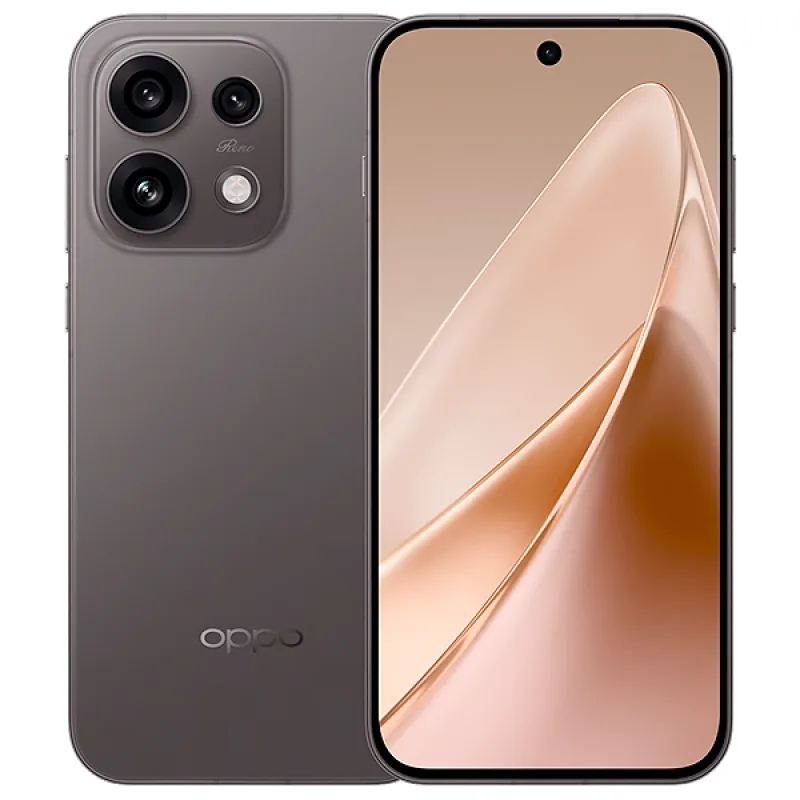
So the telephoto, ultra-wide and selfie cameras are effectively identical, and the decision comes down to the main camera. The Pro's 1/1.56-inch sensor is large for this class, and with the f/1.8 aperture and OIS it should have a real advantage in indoor and evening shots; the 200MP resolution is mostly a daylight and cropping tool rather than an everyday setting. The standard model's 50MP main camera is smaller, but its three-way consistency means zoom and wide shots should hold up better relative to the main camera than they do on phones that pair a good main lens with an 8MP ultra-wide and no telephoto.
What specifications cannot show is colour consistency between the cameras, night-mode processing and selfie skin tones. Those need hands-on samples, and this review does not invent results we have not measured.
Battery and charging
The standard Reno17's 8,000mAh silicon-carbon battery is the largest in the pair and one of the biggest in any mainstream phone at this price. Combined with a 4nm Snapdragon 7 Gen 4 and a 120Hz AMOLED, the hardware points to two-day endurance for many users, although heavy 5G use and full brightness will pull that back. The Reno17 Pro's 7,250mAh cell is 750mAh smaller but sits in a much smaller body, and with the Dimensity 8550 Super it should still deliver a full day of heavy use and more for lighter users.
Charging is identical: 80W wired with 55W PPS and UFCS support, reverse wired charging and a 13.5W PD fallback for generic chargers. Neither phone lists wireless charging. For cells this large, 80W is a sensible match, and the identical hardware removes charging from the comparison entirely.
Price in Bangladesh and alternatives
The Reno17 (China) is expected to land at around ৳70,000 as an unofficial import, and the Reno17 Pro (China) at around ৳80,000, with no official price or warranty announced for either. Published price references put them near €490 and €570 in Europe before local taxes, which is consistent with those import estimates. The ৳10,000 gap is what you pay for the compact body, the 200MP main camera and the faster chip; everything else on the Pro's side of the table is either identical or smaller.
Among other options, the Oppo Reno16 at around ৳65,000 is the previous generation with a 6.32-inch 1216 x 2640 display, the Snapdragon 7 Gen 4, a 6,700mAh battery and 80W charging, which makes it the cheapest way into this compact shape.
The Vivo S60 at about ৳64,000 pairs the Snapdragon 8s Gen 3 with a 7,200mAh battery and a 50MP periscope telephoto, undercutting both Reno17 models on price with a stronger chip. The Vivo V80 at ৳79,999 official, or around ৳76,000 unofficial, uses the same Snapdragon 7 Gen 4, adds 90W charging and a 50MP periscope, and carries official warranty support, which matters for buyers who worry about after-sales service.
For raw performance, the iQOO Neo12 (China) at around ৳90,000 offers the Snapdragon 8 Elite Gen 5, a 6.83-inch 1440 x 3200 display, a 9,000mAh battery and 100W charging, though its camera system is simpler and it is a considerably bigger phone. The Vivo X500 at around ৳100,000 moves into flagship territory with the Dimensity 9600M and a 7,500mAh battery.
Which one should you buy?
- Choose the Reno17 if battery life and screen size come first, or if you need 1TB of storage. It is the endurance phone of the pair, and the brightness figure gives it an edge outdoors.
- Choose the Reno17 Pro if you want a phone you can use one-handed without giving up a large battery or a telephoto lens. The 200MP main sensor and the Dimensity 8550 Super make it the better camera and gaming choice.
- Choose the Reno17 Pro also if flicker-sensitive screens bother you, since only it lists 3,840Hz PWM dimming.
- Choose neither if official warranty is non-negotiable; both are unofficial imports today, and the Vivo V80 at ৳79,999 official is the closest alternative with local support.
For a field-by-field breakdown of the two Oppo models, our Reno17 vs Reno17 Pro comparison page keeps every specification side by side.
Verdict
The Oppo Reno17 and Reno17 Pro (China) are two answers to the same brief, and Oppo has split them cleanly. The standard Reno17 is the endurance phone: a 6.56-inch AMOLED with 6,000 nits of peak brightness, an 8,000mAh silicon-carbon battery, three 50MP cameras and up to 1TB of storage, all at around ৳70,000 as an import.
The Reno17 Pro is the compact camera phone: the same design language in a 192g body, a sharper 6.32-inch panel with 3,840Hz PWM dimming, a 200MP main camera with a larger sensor, and the faster Dimensity 8550 Super, at around ৳80,000.
The single compromise on each side is the other phone's strength. The Pro gives up 750mAh of battery and the large screen; the standard model gives up the 200MP sensor, some processing headroom and one-handed comfort. Neither offers wireless charging, and neither comes with official warranty in Bangladesh yet.
At the current import prices, the ৳10,000 premium for the Pro buys a better camera, a faster chip and a more usable size, which is fair value for anyone who cares about those three things. Buyers who only want the longest battery life and the biggest screen should save the money and take the standard Reno17.