Huawei Osta O1 Pro Review: 200MP Camera, 7,000mAh Battery and a Spec Sheet That Reads Like a Flagship
The Huawei Osta O1 Pro pairs a 200MP OIS main camera and a 50MP periscope with a 7,000mAh battery, a 120Hz OLED and the new Kirin 9030S. It has not launched in Bangladesh yet and no price has been announced, so this review works from the published specification sheet and flags everything that still needs a retail unit to confirm.
Article Content
Huawei has not announced the Osta O1 Pro for Bangladesh, and at the time of writing the phone is still listed as rumored in industry databases. What we do have is a complete, consistent specification sheet that has appeared across multiple listings: a 6.39-inch 120Hz OLED, a 200MP main camera with optical stabilisation, a 50MP periscope telephoto, a 7,000mAh battery and Huawei's new Kirin 9030S chipset. This review examines that sheet section by section against the current flagship market, and it is honest about the parts we cannot verify without a retail unit. The full hardware breakdown lives on our Huawei Osta O1 Pro specifications page, and the brand's other models are listed under Huawei phones.
The short version is that the Osta O1 Pro is not trying to be a slim fashion phone. It is a camera-and-battery flagship with a 7,000mAh cell, 66W wired charging, 50W wireless charging and an IP68/IP69 body. Those numbers matter more than the marketing name, so they are what this review focuses on.
Huawei Osta O1 Pro at a glance
| Feature | Huawei Osta O1 Pro (published specs) |
|---|---|
| Display | 6.39-inch OLED, 1320 x 2232 (about 406ppi), 120Hz, 1B colors, 6,500 nits peak, Kunlun Glass |
| Chipset | Kirin 9030S (5nm), octa-core Taishan CPU, Maleoon 935F GPU |
| Memory | 12GB or 16GB RAM; 256GB, 512GB or 1TB storage; no card slot |
| Rear cameras | 200MP f/1.8 23mm wide (PDAF, OIS) + 50MP f/2.6 88mm periscope telephoto (PDAF, OIS, 3.7x optical) |
| Selfie camera | 50MP f/2.4 wide, 4K video at 30fps |
| Battery | 7,000mAh non-removable |
| Charging | 66W wired, 50W wireless, 5W reverse wired |
| Body | Glass front (Kunlun Glass), glass back, aluminum frame; IP68/IP69, submersion to 2m for 30 minutes |
| Software | HarmonyOS 7.0 |
| Price in Bangladesh | Not announced |
Design and durability
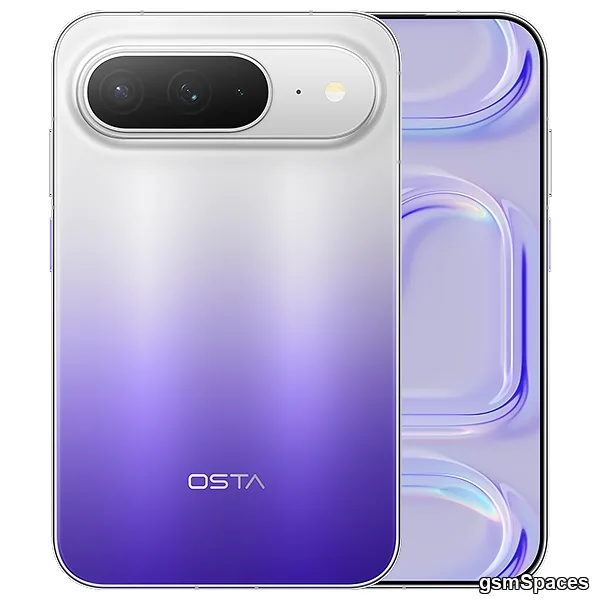
The Osta O1 Pro uses a glass sandwich design: Kunlun Glass on the front, glass on the back and an aluminum frame between them. Huawei does not publish dimensions or weight for this model yet, so we will not invent them. What the listings do confirm is the finish lineup, White, Black and Purple, and a large horizontal camera island on the upper back that houses the two rear lenses. The purple version is the most distinctive of the three because the back panel shifts between violet and silver depending on the light.
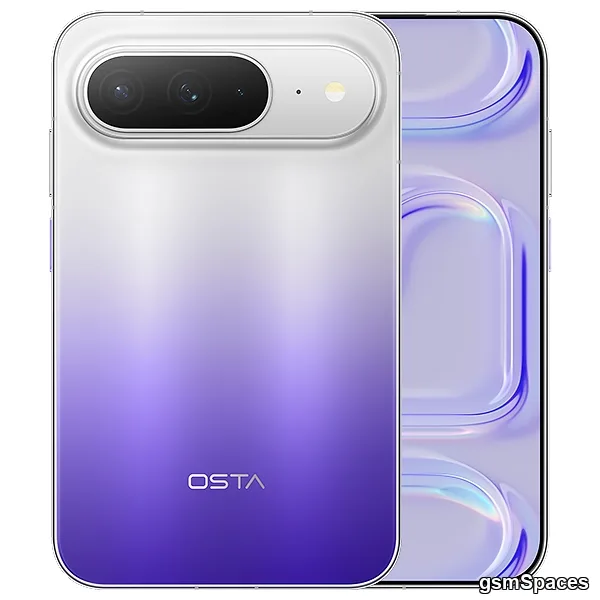
The durability rating is the more interesting detail. IP68 is common on flagships, but IP69 adds protection against high-pressure, high-temperature water jets, and Huawei lists both along with submersion up to 2m for 30 minutes. For a phone that is likely to be carried outdoors and used for photography in the rain, that is a meaningful advantage over the IP65 and IP66 ratings still found on many mid-range devices.
The SIM tray is unusual. The listings describe two Nano-SIM slots plus two eSIM profiles, with a maximum of two active at once. Travellers who keep a local SIM and a home number can run both without giving up a physical slot, and there is no microSD expansion, which is normal at this tier but worth knowing before you pick the 256GB model.
Display
The screen is a 6.39-inch OLED with a resolution of 1320 x 2232, which works out to roughly 406 pixels per inch, a 120Hz refresh rate and 10-bit color. The panel is rated at 6,500 nits peak, a figure that puts it in the same class as the brightest flagships of 2026 and should keep it readable in direct sunlight. Huawei also lists 2160Hz PWM dimming, which is aimed at people who notice flicker at low brightness, and HDR Vivid support for streaming content.
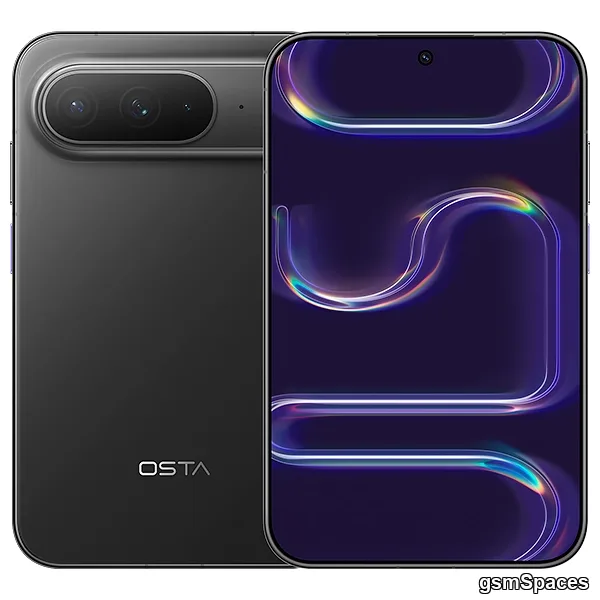
The 6.39-inch size is deliberately compact by 2026 standards. Most flagship phones have moved past 6.7 inches, so the Osta O1 Pro should be one of the few high-end options that still fits comfortably in one hand. The 1320 x 2232 resolution is not the sharpest on paper, but at this size it is dense enough that the difference from a 1440p panel will be hard to see in normal use. The punch-hole selfie camera sits at the top centre, and the screen is flat rather than curved, which reduces accidental touches and makes screen protectors easier to fit.
Performance and software
Huawei's Kirin 9030S is built on a 5nm process and pairs eight Taishan CPU cores, one at 2.7GHz, three at 2.15GHz and four at 1.62GHz, with a Maleoon 935F GPU. That configuration is designed for sustained efficiency rather than benchmark records. The 12GB and 16GB memory options and the 1TB storage ceiling suggest the phone is aimed at heavy multitasking and content creation, not just everyday messaging.
The software is HarmonyOS 7.0. That is the single biggest caveat for buyers in Bangladesh. HarmonyOS runs Android apps through Huawei's own ecosystem, and the availability of banking apps, some Google-dependent services and region-locked features varies by model and market. Anyone who relies on Google Play services, or on apps that check for them, should confirm compatibility before importing this phone. The upside is Huawei's track record on update longevity and the deep integration between the phone and its cameras, which is difficult to match on generic Android builds.
There is no independent benchmark data for the Kirin 9030S yet, so claims about gaming performance would be guesswork. The 120Hz display and the 5nm process point to a smooth everyday experience, but we will only know how the GPU handles sustained loads once retail units are tested.
Cameras
The camera system is the reason this phone exists. The main sensor is a 200MP unit with an f/1.8 aperture and a 23mm equivalent lens, supported by phase-detection autofocus and optical image stabilisation. A sensor this large is usually used with pixel binning, combining groups of pixels into a 12.5MP or 50MP output, which improves low-light performance at the cost of a smaller file size. Huawei's processing has historically been strong on colour and dynamic range, and the high-resolution sensor should allow detailed crops in good light.
The second camera is a 50MP periscope telephoto with an f/2.6 aperture and an 88mm equivalent lens, giving 3.7x optical zoom with its own OIS. That is a more useful telephoto range than the 2x or 3x crop sensors found on many flagships, and it should hold up well for portraits and distant subjects. Huawei also lists laser autofocus and a colour spectrum sensor, both of which are aimed at faster focus and more accurate colour in mixed lighting.
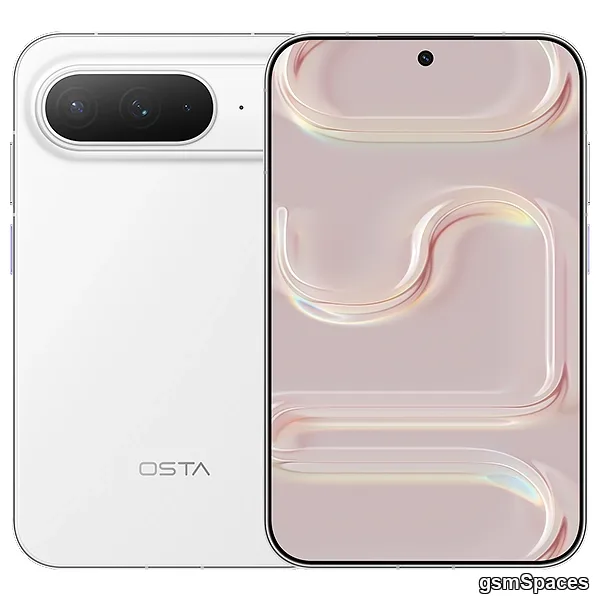
Video recording is listed at 4K with gyro-based electronic stabilisation and HDR Vivid. The selfie camera is a 50MP f/2.4 wide-angle unit that can record 4K at 30fps and 1080p at up to 120fps, which is unusually capable for a front camera and should appeal to vloggers. We have not seen sample images from a retail unit, so this section describes hardware capability, not image quality.
Battery and charging
The 7,000mAh cell is the headline number. Most flagships in 2026 sit between 5,000mAh and 6,000mAh, and only a handful of gaming and endurance phones go beyond 7,000mAh. Combined with a 6.39-inch screen and a 5nm chipset, the Osta O1 Pro should comfortably last a full day of heavy use and stretch to two days for lighter users. Charging is 66W wired and 50W wireless, with 5W reverse wired charging for accessories. Those are solid figures, though not the fastest on the market, and Huawei has not published a claimed charge time.
The trade-off for the larger battery is usually weight and thickness. Huawei has not listed either, and the phone's glass-and-aluminum construction suggests it will not be a featherweight. Buyers who prioritise a light phone should wait for the official dimensions before committing.
Connectivity and extra features
The Osta O1 Pro covers 5G, LTE, Wi-Fi 7, Bluetooth 6.0 and NFC, and it includes an infrared blaster for controlling TVs and air conditioners. The USB-C port is USB 3.1 with DisplayPort 1.2 output, so the phone can drive an external monitor, and there is OTG support for accessories. Stereo speakers are included, but there is no 3.5mm headphone jack and no FM radio.
One feature deserves a separate note: Huawei lists BDS Satellite Messaging, but the listing specifies China only. That means the satellite messaging capability will not work in Bangladesh even if the hardware is present. It should not be counted as a reason to buy the phone in this market. The side-mounted fingerprint reader, accelerometer, gyro, proximity sensor, compass and altimeter round out the sensor package.
Price and availability in Bangladesh
Huawei has not announced the Osta O1 Pro in Bangladesh and has not set a local price. Any figure circulating online at this stage is either a conversion from another market or an estimate from importers, and neither comes with a manufacturer warranty. Buyers who import the phone should expect to pay duty and to deal with a seller rather than an authorised service centre if something goes wrong. We will update the Osta O1 Pro price page as soon as an official Bangladeshi price appears.
For context, a 200MP main camera, a 50MP periscope, 7,000mAh battery, 50W wireless charging and IP69 protection are flagship-level features. If Huawei prices the phone aggressively in this region it could undercut the established flagship names; if it prices it like a premium camera phone, most buyers in Bangladesh will wait for the official launch rather than import.
Verdict
The Huawei Osta O1 Pro is one of the more interesting spec sheets of the season. It combines a genuinely large battery with a camera system that does not cut corners on the telephoto lens, and it keeps a compact 6.39-inch body instead of following the industry towards ever-larger screens. The IP69 rating and 50W wireless charging are bonuses that many rivals still skip.
The reasons to hesitate are just as clear. The phone has not been announced in Bangladesh, there is no local price, no retail unit has been tested, and HarmonyOS brings app-compatibility questions that matter more here than in China. The launch status is still rumored, so even the specification sheet could change before release.
- Pros: 200MP OIS main camera and 50MP periscope telephoto; 7,000mAh battery with 66W wired and 50W wireless charging; 120Hz OLED with 6,500 nits peak and 2160Hz PWM dimming; IP68/IP69 durability in a compact 6.39-inch body; 50MP selfie camera with 4K video.
- Cons: No Bangladesh launch or price yet; HarmonyOS app compatibility needs checking; no memory card slot; satellite messaging limited to China; dimensions and weight still unpublished.
If you are shopping for a camera-focused phone right now, the sensible move is to wait for Huawei's official launch details rather than import blind. Keep an eye on our Huawei Osta O1 Pro page for the confirmed price, release date and any changes to the specification sheet.